
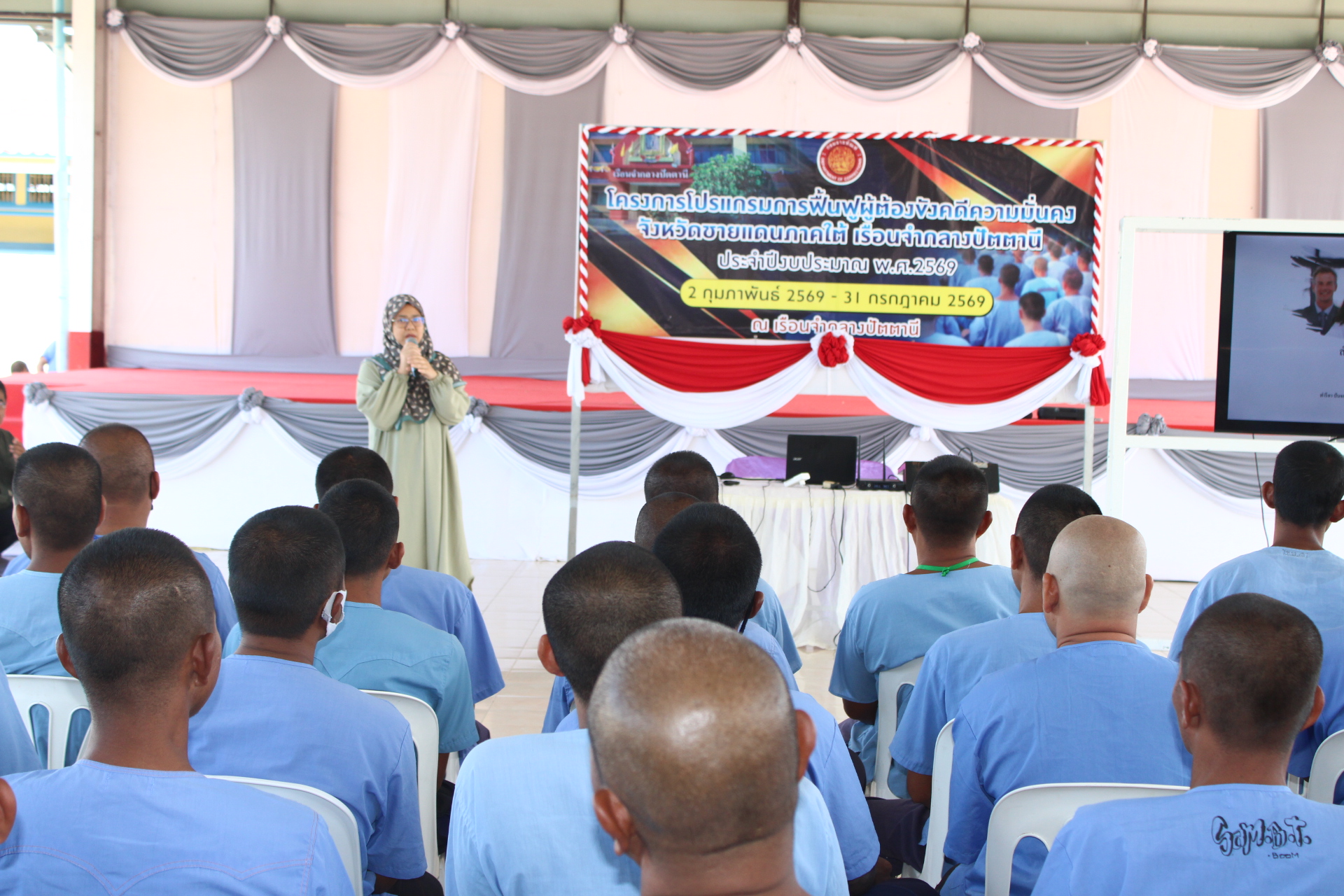
เมื่อวันที่ 17-18 มีนาคม 2569 ที่ผ่านมา ผศ.โชคชัย วงษ์ตานี อ.ฟารีดา ปันจอร์ และคุณอุสมาน หวังสนิ อาจารย์และนักวิจัยของสถาบันสันติศึกษาเป็นวิทยากรในโครงการอบรมโปรแกรมฟื้นฟูผู้ต้องขังคดีความมั่นคงจังหวัดชายแดนภาคใต้ เพื่อเสริมสร้างเจตคติที่ดีด้วยมิติครอบครัว และส่งเสริมการพัฒนาคุณภาพชีวิตของผู้ต้องขังให้สามารถกลับสู่สังคมได้อย่างปกติสุข ซึ่งจัดโดย เรือนจำกลางปัตตานี
การอบรมประกอบครั้งนี้ประกอบด้วยการบรรยายให้ความรู้และการทำกิจกรรมเพื่อสร้างการมีส่วนร่วมของผู้เข้าอบรมในประเด็นการสร้างความเข้าใจกันในครอบครัวและชุมชน การสื่อสารที่ข้ามผ่านความขัดแย้ง การฟังด้วยใจ คุยด้วยรัก การจัดการความขัดแย้งด้วยแนวทางสันติวิธี และสันติวัฒนธรรมเพื่อการอยู่ร่วมกันในสังคมพหุวัฒนธรรมบนฐานแนวคิดกระบวนการยุติธรรมในระยะเปลี่ยนผ่าน (Transitional Justice) และการสร้างสันติภาพที่ครอบคลุมทุกฝ่าย (Inclusive peacebuilding)
[English]
IPS Staff Serve as Resource Persons in the Rehabilitation Program for Security-Related Detainees in Thailand’s Deep South, Emphasizing Family-Centered Approaches and Transitional Justice at Pattani Central Prison
...
On 17–18 March 2026, at Pattani Central Prison, Pattani province, faculty members and researchers from the Institute for Peace Studies (IPS), Prince of Songkla University—Assistant Professor Chokchai Wongtanee, Ms. Fareeda Panjor, and Mr. Usman Wangsani—served as resource persons in a rehabilitation training program for detainees involved in security-related cases in Thailand’s Deep South.
The program aimed to foster positive attitudes through a family-centered approach and to enhance their capacity to reintegrate constructively and peacefully into society. This initiative reflects IPS’s commitment to advancing sustainable peace through inclusive and human-centered approaches.
The training combined interactive lectures and participatory activities designed to engage participants in key themes, including strengthening understanding within families and communities, communication across differences, empathetic listening, and constructive dialogue. It also addressed the cultivation of a culture of peace in a pluralistic society, and principles of transitional justice and inclusive peacebuilding.
Through this engagement, IPS continues to promote practical pathways toward reconciliation, social cohesion, and long-term peace in conflict-affected areas.